Open Ground, Long Light
What the Highveld sun does to a house with paddock on three sides and nothing standing in front of the glass — the real sun angles at 26° south, the storm and hail season, and what we would actually specify wall by wall. Free to read, nothing gated, every claim sourced at the foot of the page.
Take this guide with you as a PDF — 17 pages, 1.7 MB, everything on this page.
Nothing between your glass and the paddock
Beaulieu sits inside the Kyalami equestrian belt, immediately north of the Kyalami Grand Prix Circuit — just over 300 properties, each in excess of a hectare, laced with more than 20km of maintained bridle trails.1 The estate describes itself as having the highest ratio of horses to owners in Africa; that is the estate's own line, not an independent count, but it is a fair summary of what you see driving in.1 Houses are predominantly Tuscan-style villas on the hectare-plus stands, with the odd bush-lodge or thatch build alongside more contemporary homes, set well back from the road at the end of long driveways.2
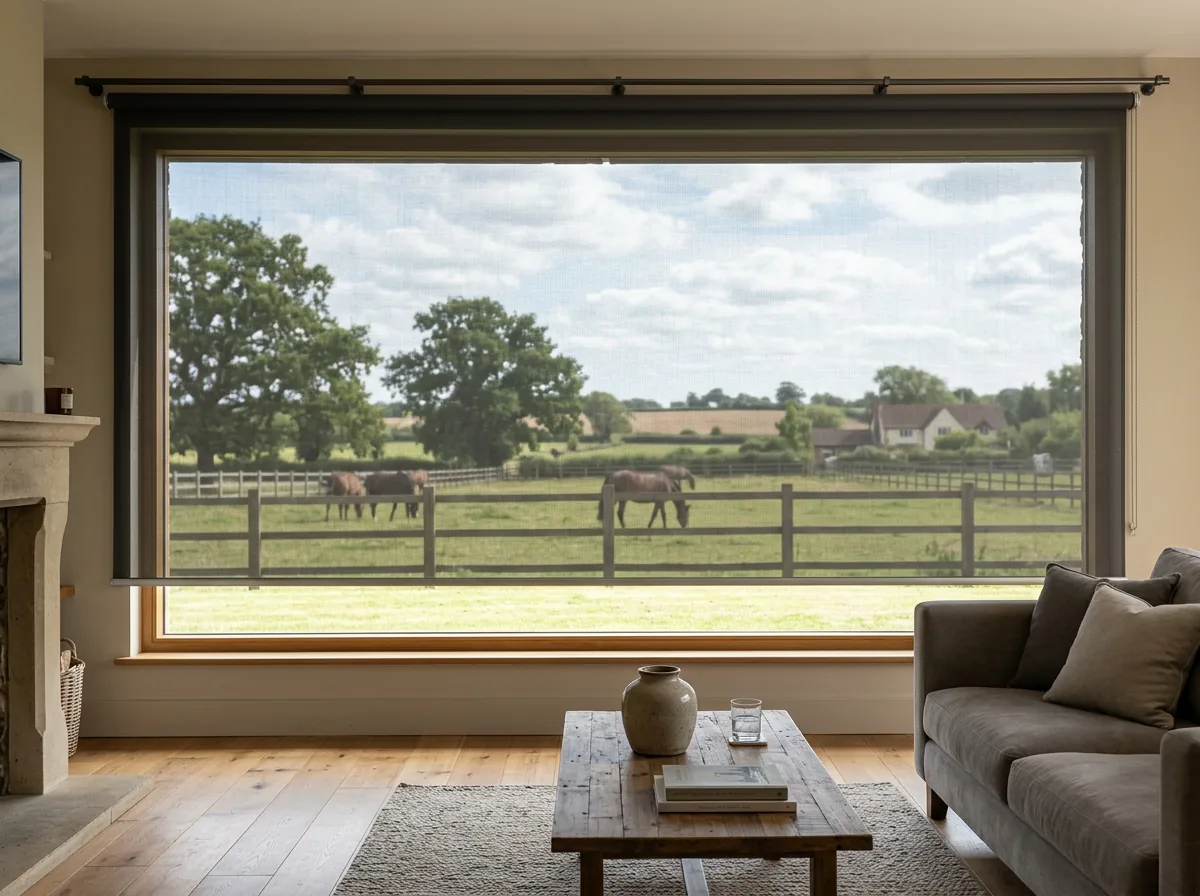
A dense suburban stand gets shade for free — next door's double storey, a street tree line, a wall that kills the last hour of afternoon sun. On a stand with paddock on three sides and post-and-rail fencing instead of a boundary wall, none of that exists. Every scrap of shade on a Beaulieu window is shade somebody specified, and the glazing itself runs wider than most: homes here are built with long, low windows turned toward the paddocks, which changes the brief from picking a fabric to working out how wide a single mechanism can realistically span.
87.7° in December, 40.84° in June — and a sun that sets south of west
Midrand sits at roughly 26° south, 1,587m above sea level — lower than Johannesburg's 1,753m, but still high enough to matter for heat and ultraviolet alike.3,5 The nearest published sun-path study is calculated for Pretoria, a quarter-degree further north: at solar noon on 21 December the sun there reaches 87.7°, effectively straight overhead, and by 20 June it has dropped to just 40.84°.4 At Beaulieu's own latitude those numbers shift by a fraction of a degree — inside the rounding of any measurement taken on site — so we have quoted the published Pretoria figures rather than invent our own.
That gap is the whole story for a north-facing window. Near-overhead in December, a modest eave stops most of the summer sun before it crosses the sill. Low and raking in by June, the same eave lets the winter sun reach deep into the room — worth keeping, given Midrand's June nights average 2.5°C, more than two degrees colder than Johannesburg's own winter minimum, and frost on open paddock ground is a normal event here.3,5 West is the opposite problem: on 21 December the sun sets at azimuth 243.35°, south of due west, arriving low and almost horizontal at the hottest part of the afternoon — precisely when the same study notes "how much hotter the afternoons are in comparison with the mornings."4 No eave stops a ray that flat; the fix has to sit on the vertical plane, outside the glass, not above it.
October to March brings the rest of the Highveld's weather with it. SAWS routinely warns of afternoon thunderstorms carrying damaging wind, lightning and hail across Gauteng in this window,6 and satellite-tracked storm data puts the Highveld hail season at its worst from mid-November through February, convective activity peaking in the afternoon — roughly 15:00 to 19:00 local time, our conversion from the paper's published UTC hours.7 Altitude adds the ultraviolet problem on top: Pretoria's summer UV Index runs 11-plus against Cape Town's 9 to 10, and Johannesburg's own summer index is recorded averaging 14, sometimes reaching 16.5,8 That is a fabric and component argument as much as a comfort one — anything left exposed on a west or north wall ages faster up here than it would at the coast.
The same house, four different problems
North
Sun all yearThe only elevation that gets sun in every season. December's 87.7° noon sun is nearly overhead, so a modest overhang or a high-mounted external blind stops most of it; June's 40.84° sun swings low and reaches under the same overhang, which is worth keeping rather than blocking. This is the easiest wall to get right — the mistake is a fixed, blunt solution that throws away free winter warmth along with the summer glare.
Verdict — sunscreen rollers, or external venetians where the room also overheats
West
The problem wallDecember's sun sets at azimuth 243.35° — south of due west — arriving low and almost level with the floor at the hottest part of the afternoon. An overhang does close to nothing against a ray that flat. An interior blind stops the glare but the pane itself keeps radiating heat inward; on a hard west wall, the fix belongs outside the glass.
Verdict — external venetians or roller shutters (shading), with a blockout roller behind for night privacy
East
Glare, not heatThe mirror geometry of west — December sunrise at azimuth 116.62° — but not the mirror problem. The house and the air are both still cold at sunrise, so the same low, direct ray is rarely uncomfortable; the complaint is glare on breakfast tables and screens, not heat.
Verdict — blockout rollers in bedrooms, cellular honeycomb where the room also runs cold
South
Cold, not brightNo direct sun of consequence in winter. At midsummer, sunrise and sunset both fall south of the east–west line, so a south wall catches a sliver of early-morning and late-afternoon light; otherwise it stays bright, flat and glare-free — and cold through a Midrand July.
Verdict — cellular honeycomb for the insulating air layer; aluminium venetians in wet rooms
Want this checked against your own walls?
Tell us which rooms or elevations are giving you trouble and roughly how many windows are involved, and we will email this guide back with notes against your own house. Nothing is booked and nobody phones you about it.
Six recommendations, and the honest catch with each
Every one has a downside. The shaded box says what it is.
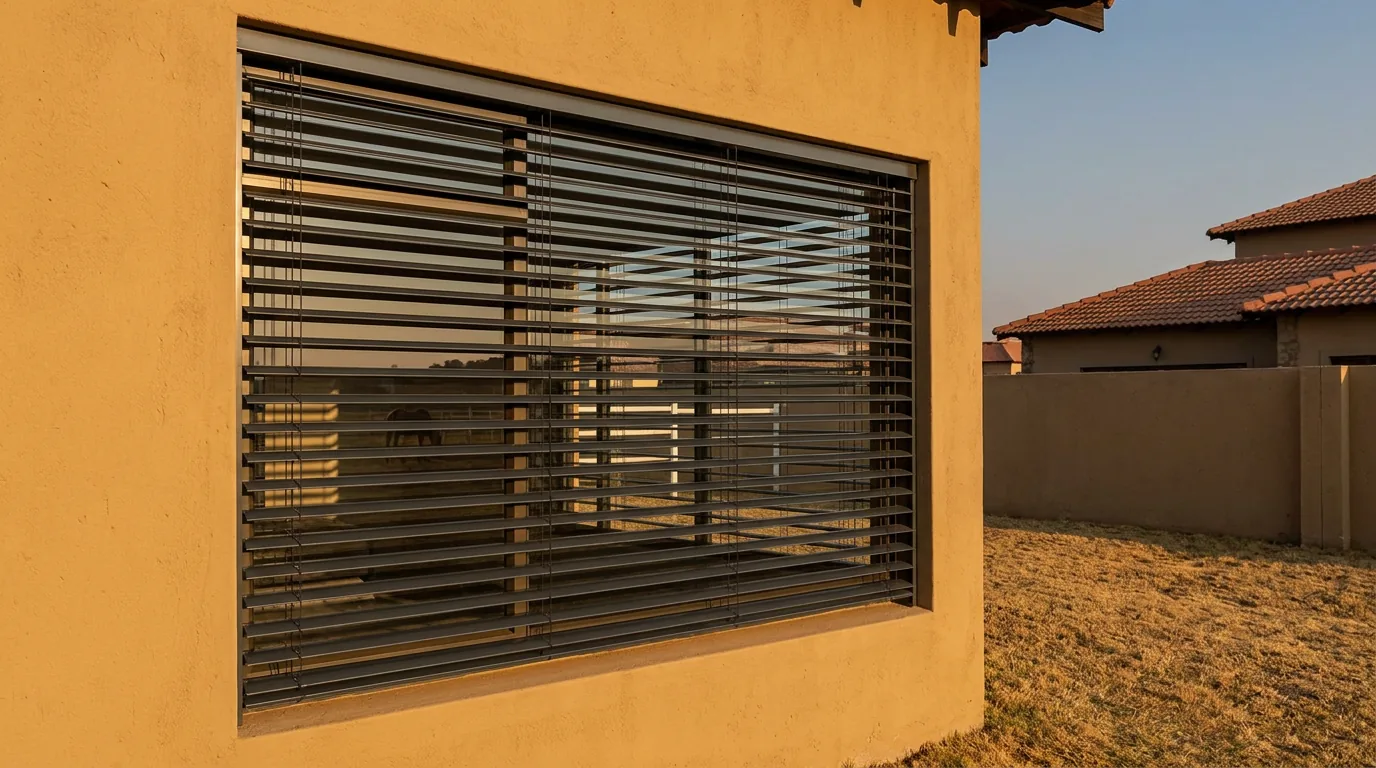
External venetian blinds
West & north-west glassOn a hard west wall we would specify these over an interior blockout roller: stopping the heat outside the glass keeps a room genuinely cooler than absorbing it inside, where the pane still radiates inward all evening. Tiltable slats kill a horizontal four o'clock ray while keeping the paddock in view.
The most expensive option here. It needs a motor and a wind sensor to survive the Highveld storm season, and — being visible from outside — likely estate sign-off before it goes up.
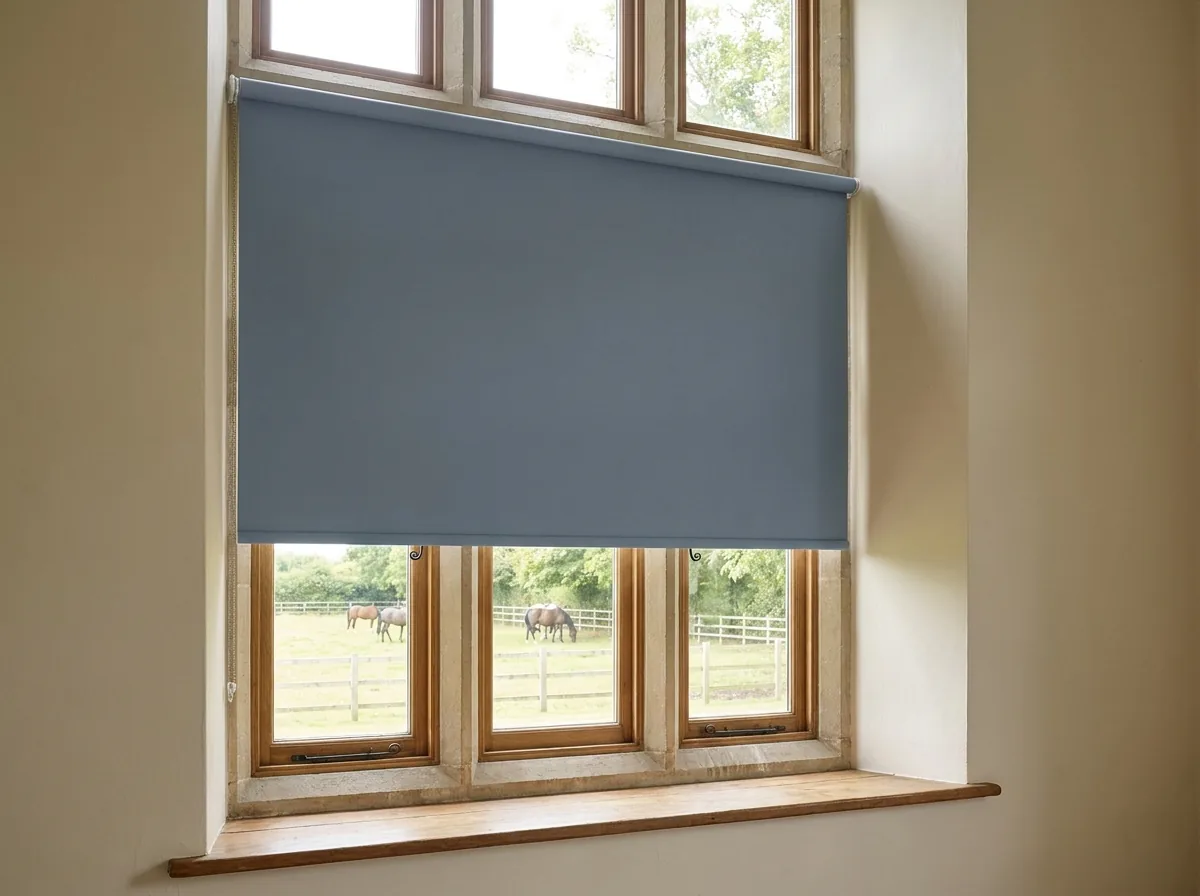
Roller blinds — sunscreen and blockout
View walls and bedroomsTwo fabrics, one mechanism. A sunscreen weave is the default where the point of the window is the view: it cuts glare and a share of the heat while the paddock stays visible through the fabric. A blockout coating is the bedroom answer — fitted outside the reveal, since an inside mount leaks a bright line down each edge — and it matters most on an east wall taking the 5.30am sunrise.
Sunscreen is not privacy — after dark it shows a silhouette. Blockout is binary, dark or full glare, so a bedroom used at both ends of the day usually wants both, fitted on a double bracket.
Roller shutters (shading)
West rooms with a genuine heat problemRigid aluminium slats rolling down from a headbox outside the window, so the curtain sits in front of the glass rather than behind it. On a west lounge that still bakes at seven in the evening, these beat any interior product. These are shading shutters, not security shutters — a different product, available on request.
Fully down they read as a solid element on the facade — exactly what an aesthetics committee looks at — and on an existing house the headbox usually shows.
Cellular / honeycomb blinds
South rooms and cold cornersThe fabric folds into hexagonal cells that trap still air against the glass, insulating where a single sheet cannot. On a south wall with no direct sun to manage and Midrand's 2.5°C June nights to fight, that insulating layer earns its keep more than any solar coating would.
A fabric structure, so not the choice for a steamy bathroom or a window that opens onto dust off a gravel estate road. Aluminium venetians wipe clean; cellular does not.
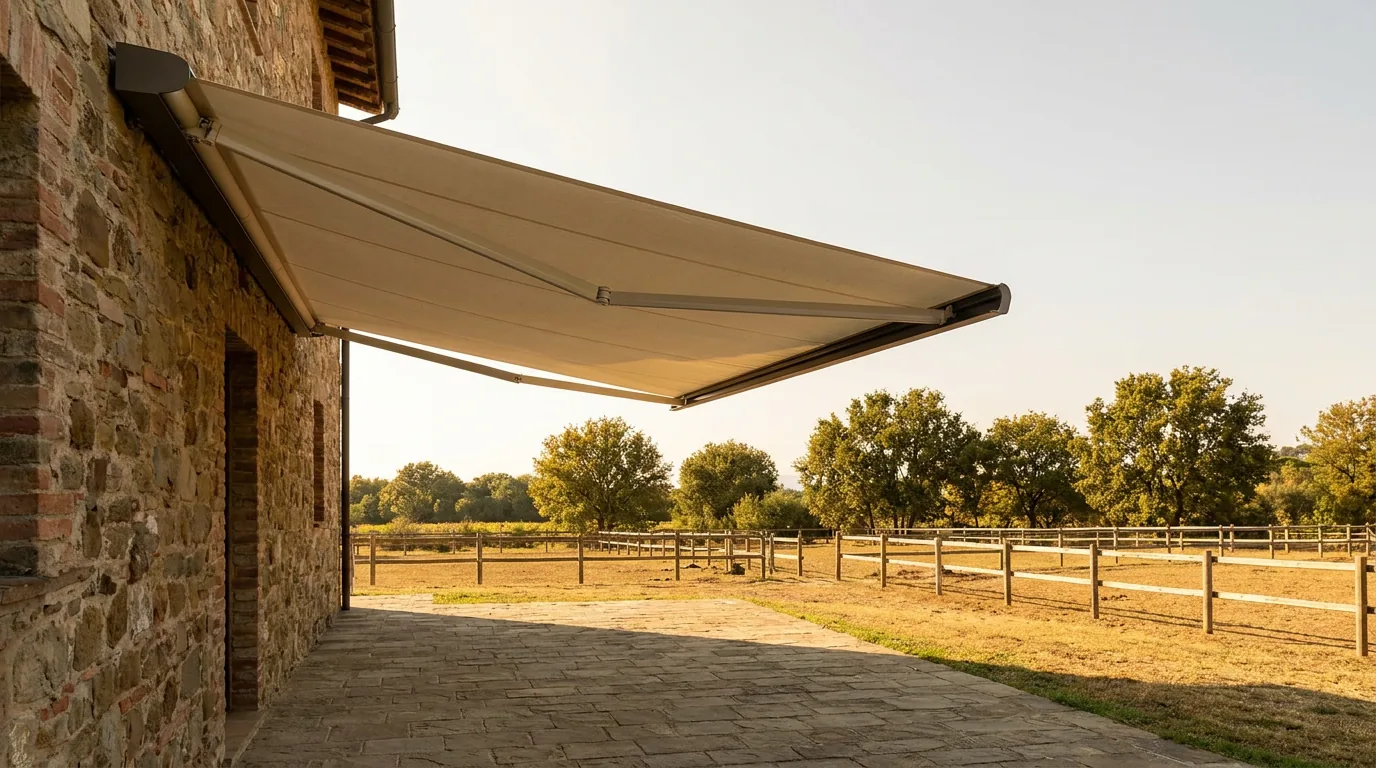
Folding-arm awnings & zip screens
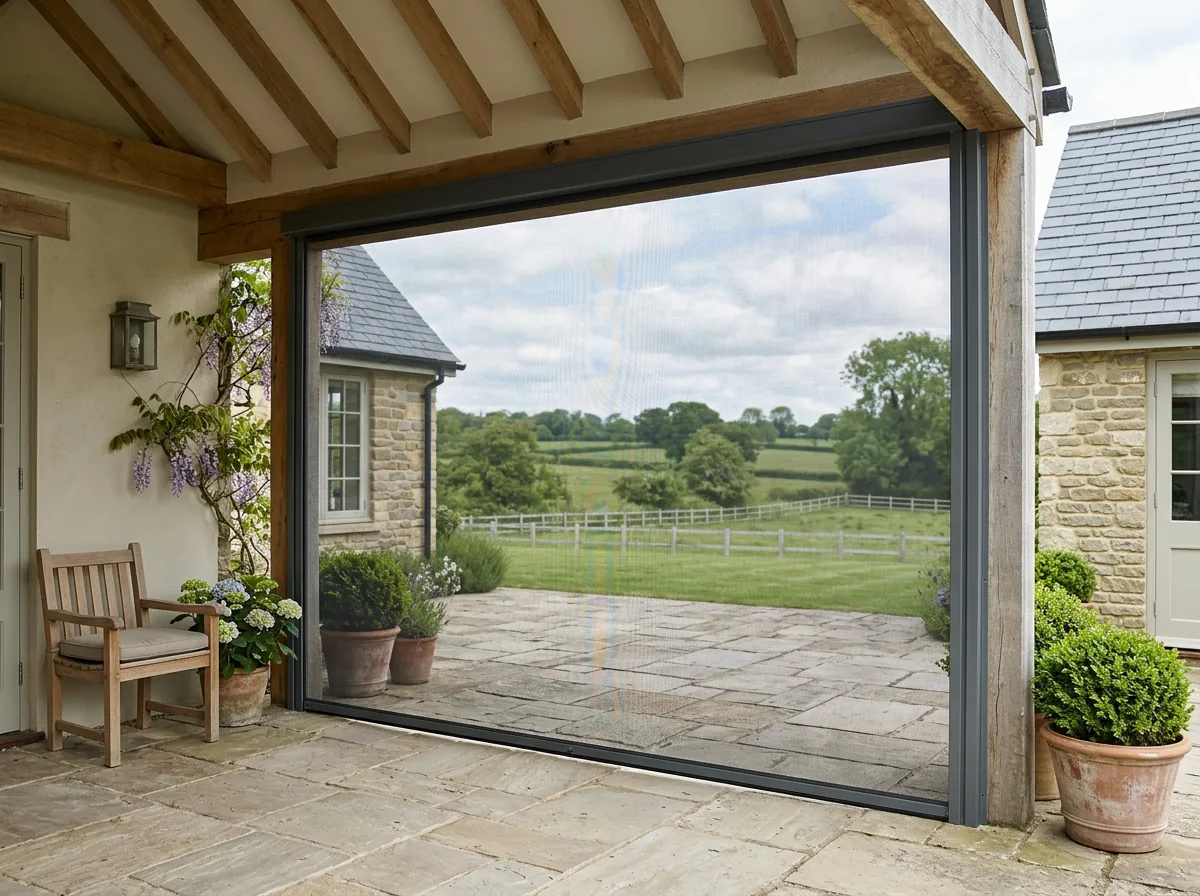
The stoep and paddock-facing patioShade over the paving on demand, no posts breaking the view, folded away again for the cool evenings that follow a Highveld storm. Pair it with zip screens on an exposed corner — flat mesh in side channels the wind cannot lift out, closing the outdoor room without closing off the paddock.
Both are sun-and-wind products, not storm products. In an October thunderstorm the awning has to retract itself, so on open estate ground we only fit motorised units with a wind sensor.
Motorisation & automation
Wide glazing, and anything outsideBeaulieu's paddock-facing glass often runs wider than a chain mechanism comfortably manages, and it is the only realistic way to run an exterior product safely — wind-sensor auto-retract needs a motor to act on. It is also the cleanest child-safe answer: no cord or chain in the room at all.
Power has to get there — a cable chased into a plastered wall, or a rechargeable motor serviced twice a year. Which applies is a question only a site visit answers.
On an estate, the architectural committee is part of the specification
We looked for Beaulieu's own published architectural guidelines and could not find them. What is public is the operational rulebook — strictly enforced speed limits for the horses on the roads, access control, patrols and CCTV.2 We will not invent a design clause that is not published. Read your own estate's current architectural pack before ordering anything visible from the road or a neighbouring paddock; treat this page as background, not a substitute. We supply the spec sheets, colours and finishes an application needs — the approval itself stays with you and the committee.
For a sense of the kind of clause this belt uses, neighbouring Kyalami Estates — a separate, guideline-controlled estate, not Beaulieu's own rule — caps buildings at two storeys and specifies clay face-brick and textured plaster in earthy tones, with non-reflective roofing.9 Expect your own estate to have something in the same spirit, and check before committing to a finish.
The neighbouring areas we also cover each bring a wrinkle. Blue Hills homes commonly sit to catch the valley view toward the Magaliesberg, roughly west to north-west of Midrand — so the biggest glazing there often faces the same low afternoon sun that makes west glass hard work everywhere on this list.10 Chartwell's stands were carved from farmland rather than a planned grid, so orientation varies house to house — a compass reading matters more there than an estate rule. 11 Waterfall runs two builds under one name: the hilltop equestrian estate, where stands can face glazing on more than one side at once, and Waterfall City's newer architecture, where a visible headrail is usually the one thing the designer wanted to avoid.12
One regulatory note for renovations rather than an existing opening: South Africa’s current energy standard is SANS 10400-XA:2026 (Edition 3), which superseded the 2021 edition in March 2026. The fenestration threshold rose from 15% to 20% of floor area, garages and patios no longer count toward it, and Johannesburg/Gauteng sits in energy zone 1. The withdrawn SANS 204 method it replaced is no longer current.13
Five things this page cannot tell you
All true of Beaulieu in general. None of it true of your house until somebody stands in the room.
Reveal depth, and what the plaster is hiding
Whether a blind sits inside the reveal or has to face-fix comes down to millimetres, and to what is behind the plaster — brick, lintel or a dry-lined bulkhead. That decides the bracket, sometimes the product.
Where west actually is
The plan says "west"; the compass might say 238° or 262°, and those two bearings take a very different December afternoon. We specify to the bearing, not the label.
How exposed the stoep really is
Awnings and zip screens live or die on this. A stoep tucked behind a wing of the house and a corner facing open paddock across a hectare stand need very different wind ratings.
How power reaches a motor
Where the nearest circuit sits, whether a cable can be chased without opening a feature wall, or whether a rechargeable motor is the cleaner answer. Two minutes with a torch settles it.
What your own estate pack currently says
Guidelines get revised and Beaulieu's are not published anywhere we could find. We would rather read your current copy on the day than fit something that has to come down again.
Book the free expert measure
A consultant visits with samples, measures every opening, takes the bearing off each wall and leaves a written quote per window. There is no charge for that visit and no commitment at the end of it. Want a rough number first? The ballpark tool sits inside the form below.
- Free in-home measure and a written quote per window
- No call-centre queue — a real consultant comes out
- Spec sheets and finish samples ready for your estate application
- Still deciding? Say so on the form and we will leave you be
Our consultant takes five to six measure appointments a week across this area, so the diary fills early — worth booking ahead if you need a particular day.
Sources
Every climate, geography and estate-rule claim above traces to one of these. Where we have reasoned rather than cited, we have said so in the text.
- Beaulieu Country Estate — just over 300 properties, each in excess of a hectare, more than 20km of maintained bridle trails, and the estate's own description of having the highest ratio of horses to owners in Africa. beaulieu-estate.co.za/about
- Gaye Cawood Realty — Beaulieu area profile: predominantly Tuscan-style villas alongside bush-lodge and thatch homes, strictly enforced speed limits, access control, patrols and CCTV. gcr.co.za/area-beaulieu-midrand
- Midrand — coordinates 25°59′57″S 28°07′35″E, elevation 1,587m, Köppen Cwb climate, ~723mm annual rainfall, January mean max 26.4°C, June mean minimum 2.5°C. en.wikipedia.org/wiki/Midrand
- "Sun, shade and natural daylight in South African town planning, with emphasis on Pretoria" — solar noon elevation 87.7° on 21 December and 40.84° on 20 June at 25.733°S, December sunset azimuth 243.35°, sunrise azimuth 116.62°, and the finding on afternoon exposure being hotter than morning exposure. scielo.org.za — S2415-04952018000200005
- Johannesburg — elevation 1,753m, average June minimum 4.7°C, record low −8.2°C (13 June 1979), summer UV index recorded averaging 14 and reaching 14–16. en.wikipedia.org/wiki/Johannesburg
- SAWS warning of severe thunderstorms bringing damaging winds, dangerous lightning and hail across Gauteng and Mpumalanga in the summer season. sanews.gov.za — SAWS severe thunderstorm warning
- Punge et al., "Hail frequency estimation across Europe and South Africa," Natural Hazards and Earth System Sciences 23 (2023) — hail concentrated along the Highveld, most frequent mid-November through February, convective activity peaking 13:00–17:00 UTC, roughly 180 hail events across 58 days a year on the Highveld. nhess.copernicus.org/articles/23/1549/2023
- Health risks associated with excessive exposure to solar UV radiation among outdoor workers in South Africa — Pretoria summer UV Index of 11-plus ("extreme") against Cape Town's 9–10, attributed to cloudless plateau skies and high altitude. pmc.ncbi.nlm.nih.gov — PMC8113384
- Kyalami Estates — a neighbouring, separately governed estate, cited here only as an example of the kind of clause this belt uses: capped at two storeys, clay face-brick and textured plaster in earthy tones, non-reflective slate or concrete-tile roofing. kyalamiestates.co.za
- Blue Hills Country & Equestrian Estate — 200ha, 128 stands of 5,000–15,000m², homes commonly sited to catch the valley view toward the Magaliesberg. bheestate.co.za/about-us
- Chartwell — agricultural-holdings smallholdings, roughly 145 properties across 380ha, subdivision restricted to 8,500m², stands carved from farmland rather than a planned grid. chartwellnorth.co.za/about-us · en.wikipedia.org/wiki/Chartwell,_Gauteng
- Waterfall — Waterfall City mixed-use precinct on the Jukskei River, and Waterfall Equestrian Estate's 120 stands of 8,000–10,000m² on hilltop ground. waterfallcity.co.za · platinum.co.za — Waterfall Equestrian Estate
- SANS 10400-XA:2021 (Edition 2) summary — fenestration threshold raised from 15% to 20% of floor area, garages and patios excluded, energy zones renamed and expanded with Johannesburg/Gauteng in Zone 1, and the single SHGC figure replacing separate west/north/east requirements. roosarchitects.co.za — SANS 10400-XA 2021 summary
- The current edition, SABS — SANS 10400-XA:2026 (Edition 3).
Four honest caveats. The solar figures in source 4 are calculated for Pretoria at 25.733° south; Beaulieu sits at about 25.99° south, so its own angles differ by a fraction of a degree — we quoted the published Pretoria numbers rather than invent our own. No suburb-level hail, wind or storm dataset exists for Beaulieu specifically; every hail and storm figure above is Highveld- or Gauteng-wide, presented that way rather than narrowed to a suburb it was never measured in. The hail paper in source 7 publishes its peak hours in UTC — the conversion to roughly 15:00–19:00 South African time is our arithmetic, not the authors'. And the "highest horse-to-owner ratio in Africa" line in source 1 is the estate's own marketing claim, used once here and attributed as such, not verified independently.
Now let's look at your actual windows.
Free in-home measure, a written quote per window, and a real consultant managing the rest.